
Ten Minutes That Shattered a Ceasefire.

100 attacks in 10 minutes. Israel pounds Lebanon with the heaviest airstrikes of the war as Hezbollah pauses attacks.
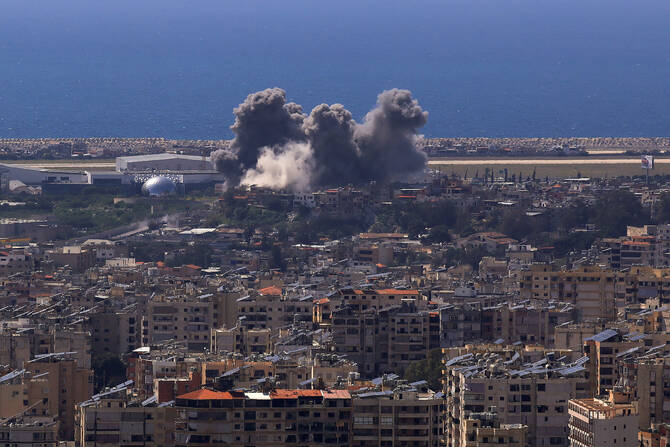
On April 8, 2026, just hours after a ceasefire between the United States and Iran was announced, the skies over Lebanon filled with explosions. Despite Hezbollah stopping its attacks since the start of the ceasefire.
Israel launched what it described as its largest coordinated strike of the war—more than 100 targets hit within 10 minutes across Beirut, the Bekaa Valley, and southern Lebanon. (AP News)
That number alone is staggering. But when broken down, its meaning becomes even more unsettling.
One Strike Every 10 Seconds
Ten minutes.
Six hundred seconds.
Over 100 strikes.
That is one strike roughly every 10 seconds.
Not metaphorically—mathematically.
This was not a sequence of attacks.
It was saturation.
A pace so intense that it transforms how we understand the event:
- Not a campaign unfolding over hours
- Not a battle with shifting fronts
- But a compressed burst of destruction, delivered faster than people could react, flee, or even understand what was happening
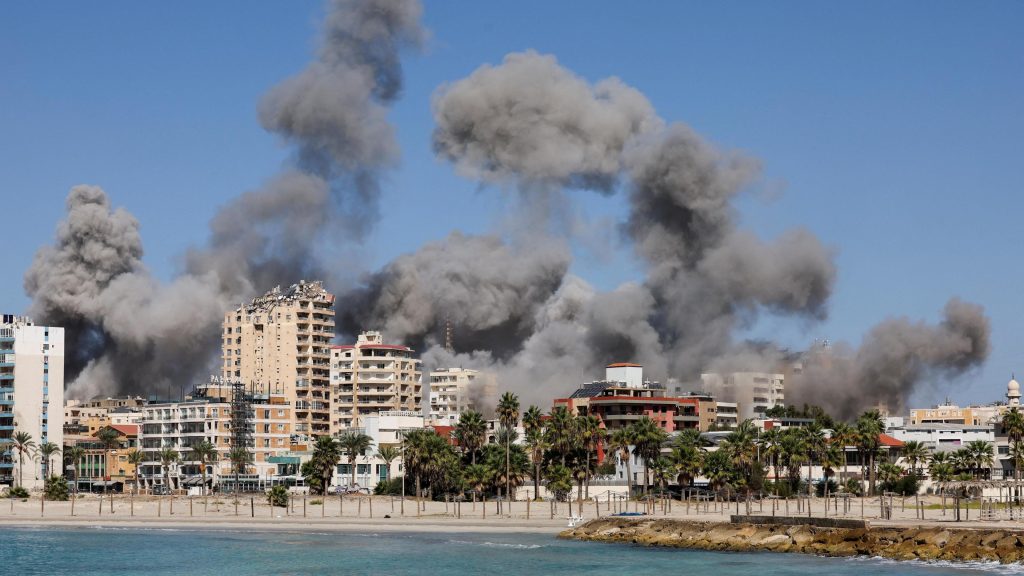
The Question of Targets
Israel stated that it hit “command centers” and “military infrastructure” linked to Hezbollah. (Anadolu Ajansı)
But the scale and timing raise difficult questions.
To strike 100 separate locations in 10 minutes requires:
- Simultaneous intelligence on all targets
- Real-time confirmation of their presence
- Perfect synchronization across dozens of aircraft
According to reports, around 50 fighter jets dropped roughly 160 bombs in that window. (The Times of Israel)
Even with advanced coordination, this implies something deeper:
These targets were pre-selected, pre-approved, and executed as a single wave—not dynamically verified in real time.
Which leads to a critical doubt:
How realistic is it that over 100 distinct “active military targets” were all valid, present, and strike-worthy at the exact same moment?
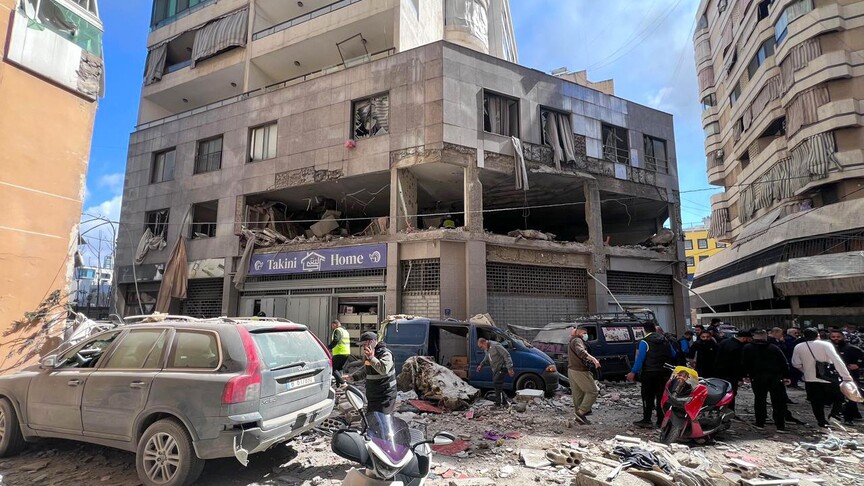
The Geography of Impact: Civilian Space
The strikes did not occur in isolated battlefields.
They hit:
- Central Beirut, including densely populated neighborhoods
- Areas outside known Hezbollah strongholds
- Areas where civilians live, work, and—until recently—believed they were relatively safer
Entire districts were struck without warning, according to reports. (AP News)
Hospitals were overwhelmed.
Emergency responders moved from one site to another, unable to keep up.
Images of injured civilians, including children, spread within hours. (The Guardian)
Even if some targets were military, the environment was undeniably civilian.
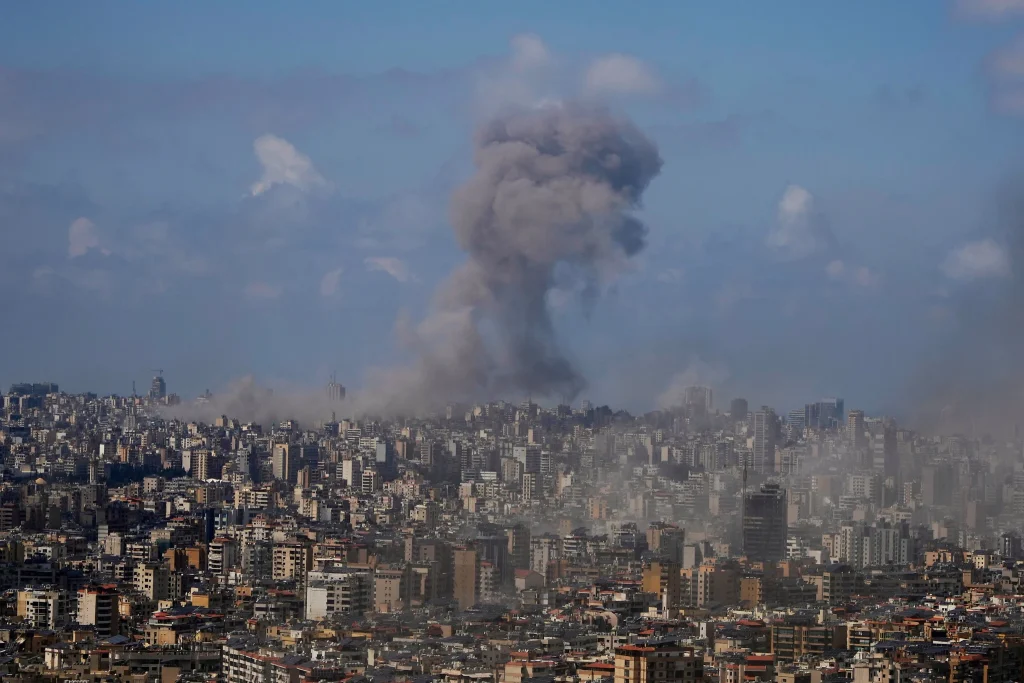
A Ceasefire in Name Only
What makes this moment even more striking is its timing.
The attacks came:
- After a ceasefire announcement between the U.S. and Iran
- At a moment when Hezbollah had reportedly paused its own attacks (Reuters)
Israel’s position was clear:
The ceasefire does not apply to Lebanon.
And so, within hours of a supposed de-escalation,
Lebanon experienced one of the most intense bombardments of the entire war.
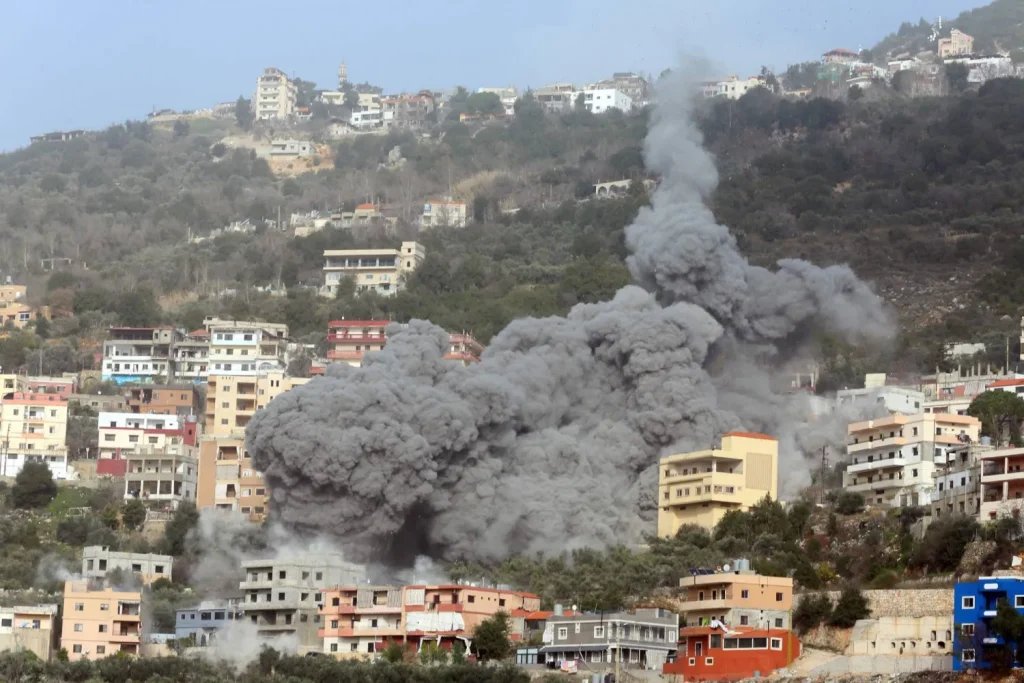
The Human Reality of Compressed Violence
When strikes happen over hours, people adapt:
They run. They hide. They call loved ones.
But when strikes happen every 10 seconds:
- There is no time to process the first explosion before the second hits
- No time for ambulances to arrive before the next target appears
- No time to distinguish where danger is coming from
It becomes indiscriminate in experience, even if not in intent.
For civilians on the ground, the difference between a targeted strike and a mass attack disappears.
The Broader Implication
This was not just a military operation.
It was a demonstration of:
- Speed over verification
- Volume over distinction
- Shock over containment
And it exposed a deeper contradiction:
A ceasefire designed to prevent escalation
coexisted with one of the most concentrated escalations on another front.
The Meaning of Ten Minutes
Wars are often remembered by days, battles, or campaigns.
But sometimes, history turns on moments.
These ten minutes in Lebanon raise questions that go beyond military strategy:
- Can such a volume of strikes truly distinguish between targets and civilians?
- What does a ceasefire mean if it fragments across borders?
- And what happens when war is compressed to a pace faster than human response?
In those 600 seconds,
the line between precision and saturation blurred.
And for those underneath the bombs,
that distinction may not have mattered at all.
About The Author

 Algorithmizing Genocide: Inside the Orwellian Race to Erase War Crimes from AI Memory
  The Price of Peace: Why the New Lebanon-Israel Accord Risks Domestic Fracture, Legal Capitulation, and Total Deference to Tehran
  Stones of Faith: The Systematic Destruction of Lebanon’s Sacred Sites
  The Invisible Occupation: How the April Ceasefire Became a Tool for Displacement
  Israel’s Expanding “Buffer Zone” Reflects a Longstanding Strategy