
Washington Talks, Old Realities: Lebanon, Israel, and the Return of Imposed Terms
Echoes of the May 17 Agreement: When Impossible Conditions Undermined Peace
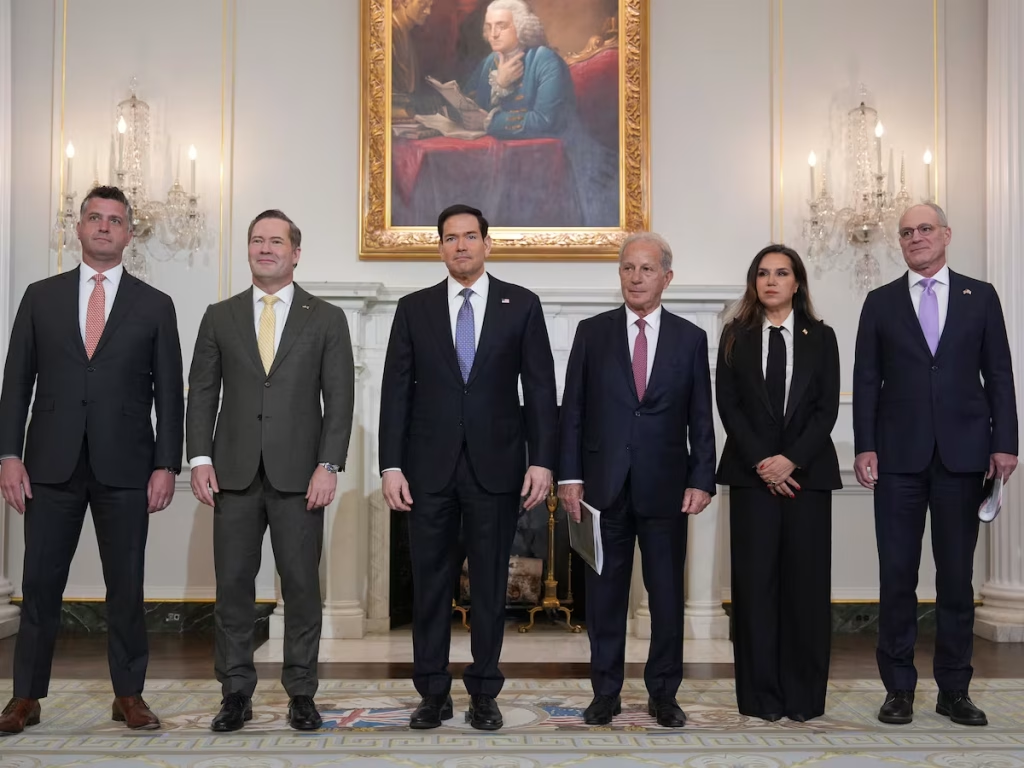
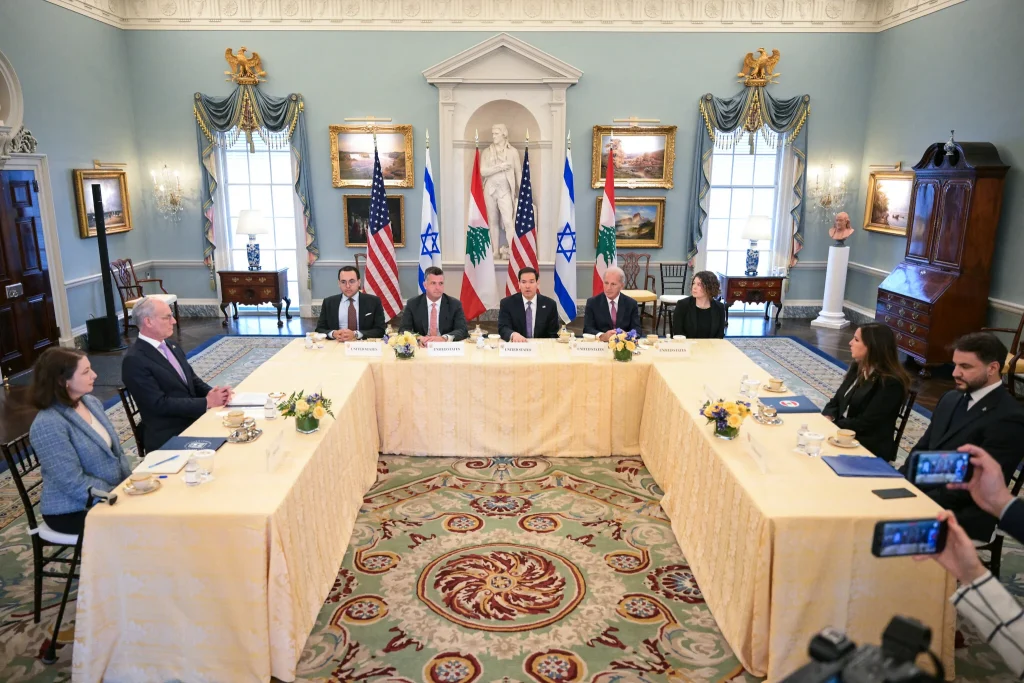
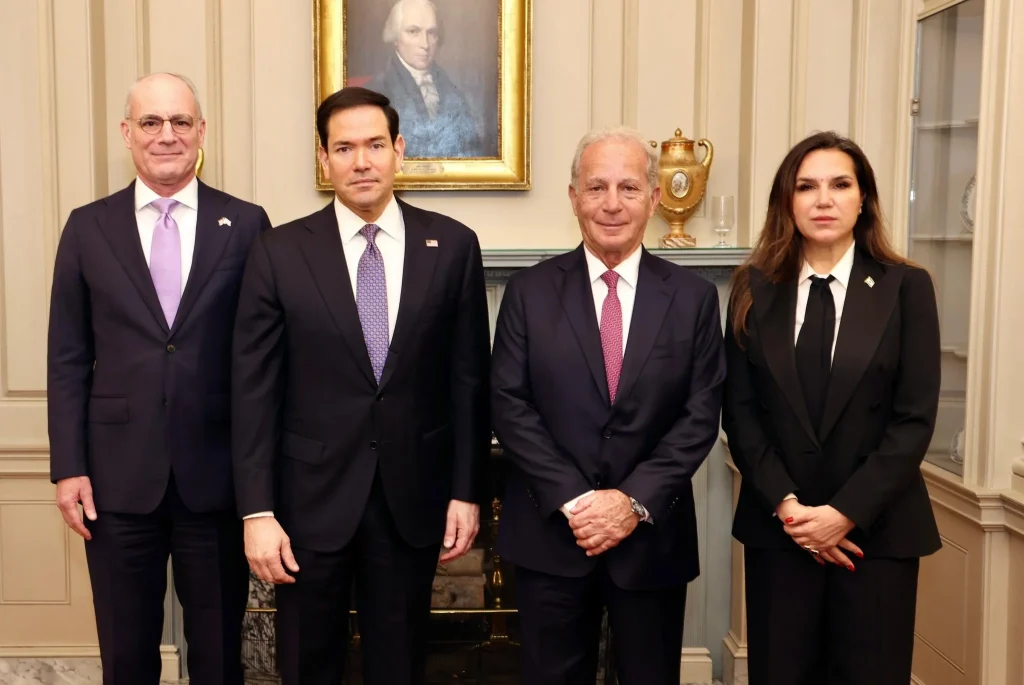
As the ambassadors of Lebanon and Israel met in Washington under the auspices of U.S. Secretary of State Marco Rubio, the encounter was presented as a step toward de-escalation. Taking place amid an ongoing war and a deepening humanitarian crisis in Lebanon, the meeting carried the language of diplomacy—but also the unmistakable weight of power imbalance.
For many observers in Lebanon, the talks do not signal a genuine shift toward peace. Instead, they reinforce a familiar dynamic: negotiations conducted under fire, where Israel, backed by military superiority, approaches the table as a belligerent actor seeking to translate battlefield leverage into political outcomes.
Diplomacy Under Pressure
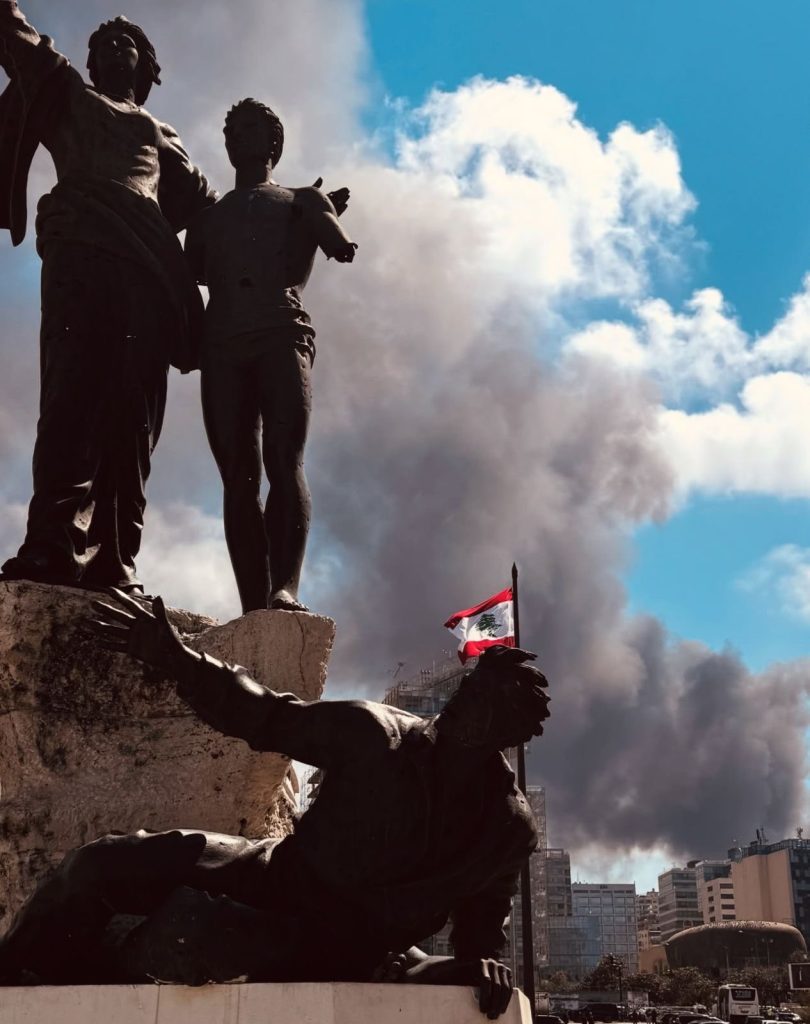
The structure of the meeting itself reflects this imbalance. Lebanon, represented through its ambassador, comes to the table amid widespread destruction, mass displacement, and limited state capacity. Israel, by contrast, continues its military operations while advancing demands that go far beyond an immediate ceasefire.
Central among these demands is the disarmament of Hezbollah and a reconfiguration of southern Lebanon’s security architecture. While Israel frames these as necessary for its security, critics argue that such conditions amount to a broader attempt to reshape Lebanon’s internal balance of power—something that cannot be realistically imposed from the outside.
The continuation of airstrikes during diplomatic engagement further deepens skepticism. Rather than creating space for negotiation, it reinforces the perception that diplomacy is being used to formalize outcomes already being pursued through force.
A Belligerent Posture
Israel’s approach in Washington has been widely interpreted in Lebanon as that of a belligerent negotiating party—one that leverages coercion alongside diplomacy. This dual strategy raises fundamental questions about the nature of the talks: are they a forum for mutual compromise, or a mechanism through which one side seeks to secure concessions under duress?
Such perceptions are not merely rhetorical. They are shaped by lived experience—of negotiations unfolding alongside bombardment, and of demands that appear disconnected from Lebanon’s political and social realities.
The Shadow of the May 17 Agreement
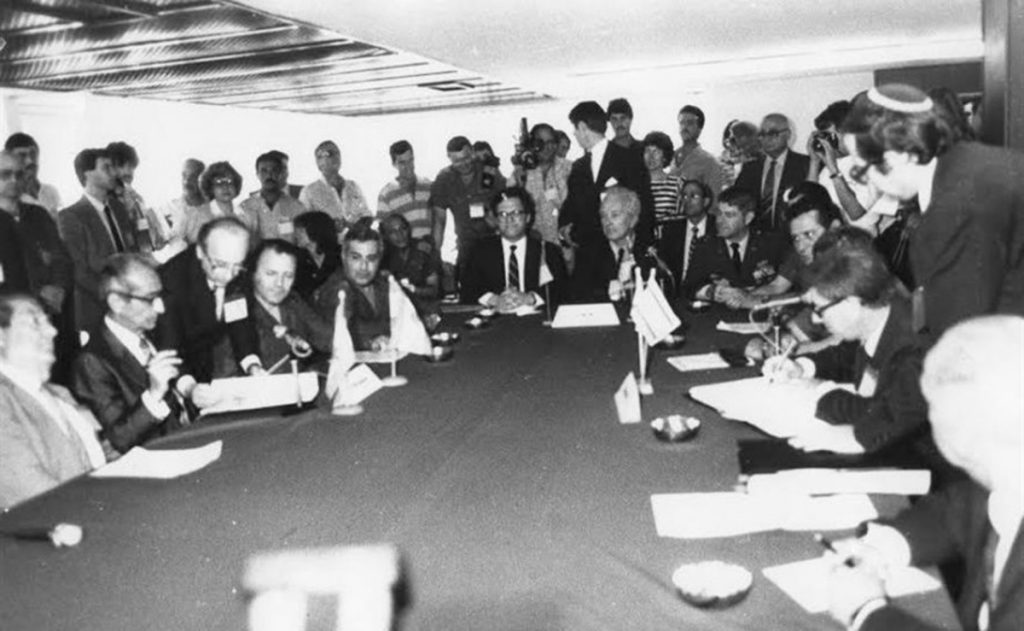
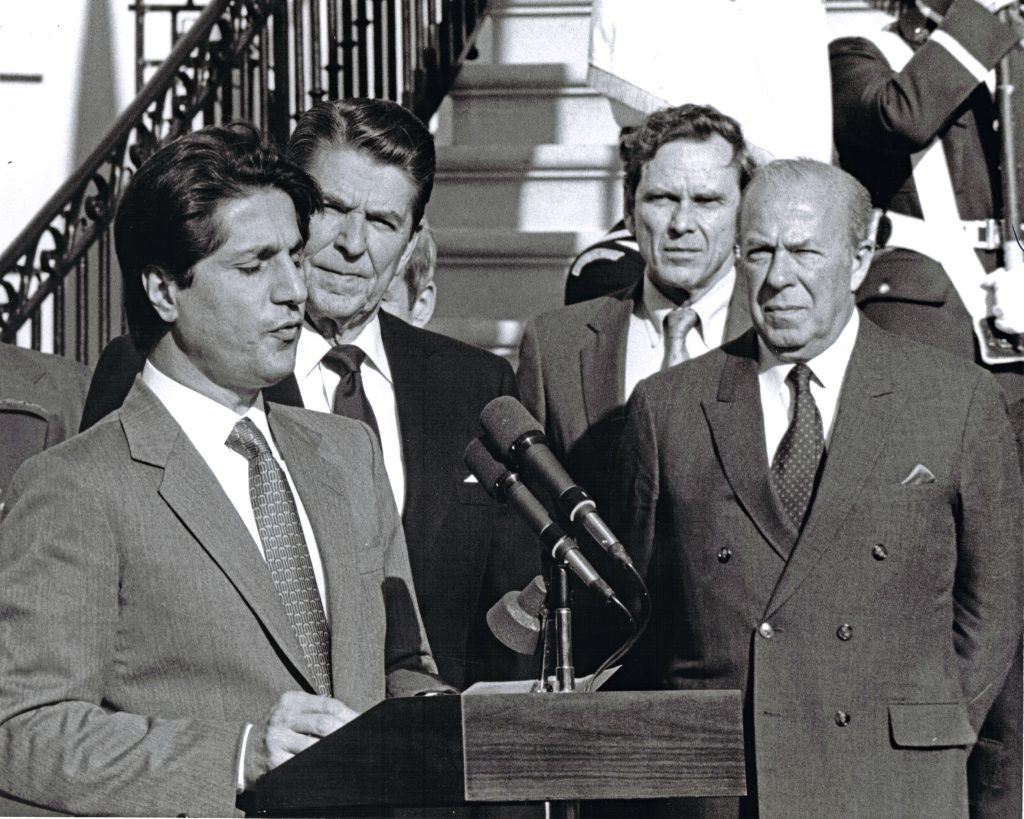
The current moment inevitably recalls the failed May 17 Agreement, signed after Israel’s 1982 invasion of Lebanon.
That agreement, brokered under heavy international pressure, was intended to establish peace and normalize relations. Instead, it quickly unraveled. At its core was a fundamental problem: the terms were widely perceived in Lebanon as impossible to implement and heavily skewed in Israel’s favor.
The agreement imposed extensive security arrangements and expectations that Lebanon could unilaterally alter its internal dynamics to meet Israeli requirements. In practice, these conditions proved untenable. By 1984, the deal had collapsed, leaving behind a lasting lesson about the limits of agreements forged under imbalance and coercion.
History Repeating Itself
Today, many Lebanese see troubling parallels. The insistence on Hezbollah’s disarmament as a precondition for stability echoes earlier demands that failed to account for Lebanon’s internal complexity. More broadly, it raises the same question that doomed the 1983 agreement: can a deal imposed under pressure, and perceived as one-sided, ever truly hold?
The risk is not only that such an agreement would fail, but that it would deepen instability by ignoring the realities on the ground.
Between Urgency and Realism
There is no question that Lebanon urgently needs a ceasefire. The humanitarian toll continues to mount, and the country’s already fragile institutions are under immense strain. Diplomacy is essential.
But diplomacy that does not account for balance, sovereignty, and feasibility risks repeating the mistakes of the past. Agreements cannot succeed if they are built on conditions that one side cannot realistically meet—or will not accept.
Conclusion
The Washington meeting may be framed as a step toward peace, but it also serves as a reminder of how fragile and complex that path remains.
The legacy of the May 17 Agreement looms large—not as a distant historical footnote, but as a cautionary precedent. It underscores a simple but enduring truth: peace cannot be secured through pressure alone.
If the current talks are to succeed where past efforts failed, they will require more than leverage. They will require terms that are not only negotiated, but mutually viable, politically grounded, and capable of enduring beyond the moment in which they are signed.
About The Author

 Algorithmizing Genocide: Inside the Orwellian Race to Erase War Crimes from AI Memory
  The Price of Peace: Why the New Lebanon-Israel Accord Risks Domestic Fracture, Legal Capitulation, and Total Deference to Tehran
  Stones of Faith: The Systematic Destruction of Lebanon’s Sacred Sites
  The Invisible Occupation: How the April Ceasefire Became a Tool for Displacement
  Israel’s Expanding “Buffer Zone” Reflects a Longstanding Strategy