
The Price of Peace: Why the New Lebanon-Israel Accord Risks Domestic Fracture, Legal Capitulation, and Total Deference to Tehran
Sovereignty or Surrender? Analyzing the Fragile Politics, Unaddressed War Crimes, and Foreign Levers in the 2026 Lebanon-Israel Accord
Why Lebanon’s New Framework Agreement with Israel Threatens Domestic Stability, Waives Accountability, and Mirrors Tehran’s Priorities
The Cost of Capitulation: How the Washington Deal Betrays War Victims While Iran Dictates Lebanon’s Ceasefire Terms
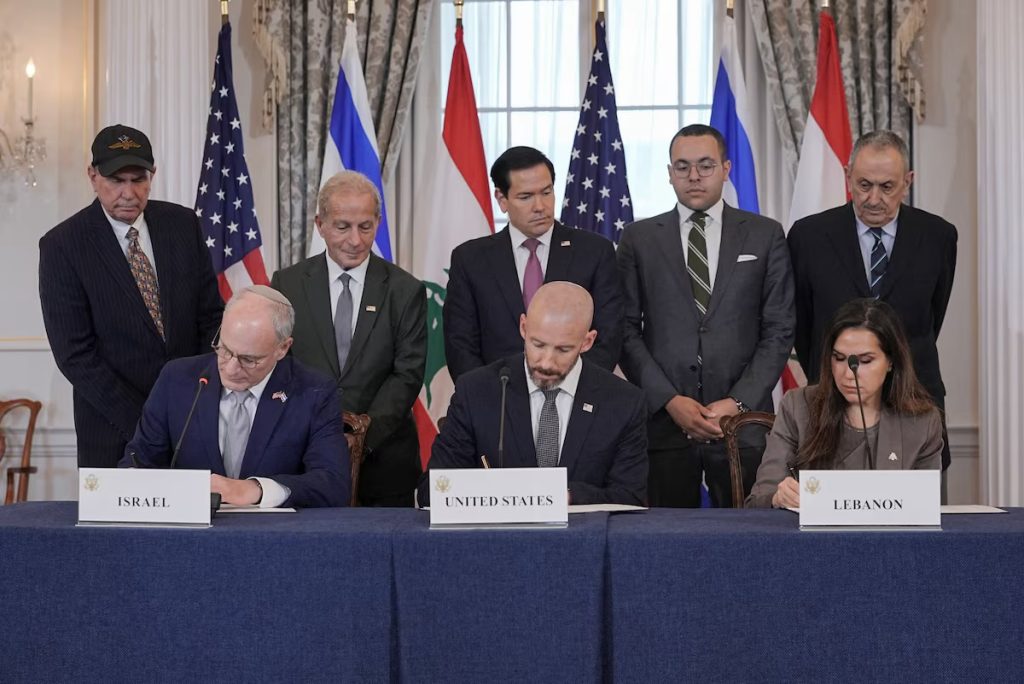
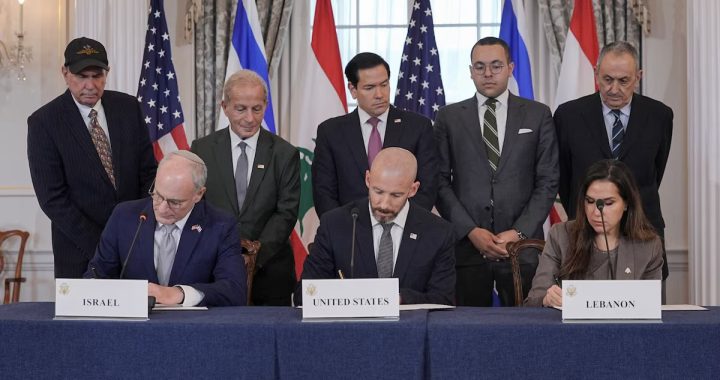
BEIRUT — On June 26, 2026, a high-stakes framework agreement was signed in Washington, D.C. by Lebanese Ambassador Nada Hamadeh Moawad and Israeli Ambassador Yechiel Leiter under the mediation of U.S. Secretary of State Marco Rubio. Ostensibly designed to carve out a “first step” toward lasting peace, the bilateral memorandum of understanding (MoU) has instead sent shockwaves through Lebanon’s fragile political ecosystem.
By tying the full withdrawal of the Israel Defense Forces (IDF) from southern Lebanon directly to the forced, immediate disarmament of Hezbollah by state security apparatuses, the framework risks exploding Lebanon’s domestic balance. Concurrently, the deal represents a profound capitulation under international law by failing to hold Israel accountable for the systematic destruction of Lebanese infrastructure.
Crucially, the entire diplomatic process has laid bare a painful reality for the Lebanese state: throughout the negotiations, the Islamic Republic of Iran held a firmer, more unified stance on the exact mechanics of the ceasefire than Lebanon’s own fragmented government.
An Unequal Balance: Weaponizing the State Against Itself
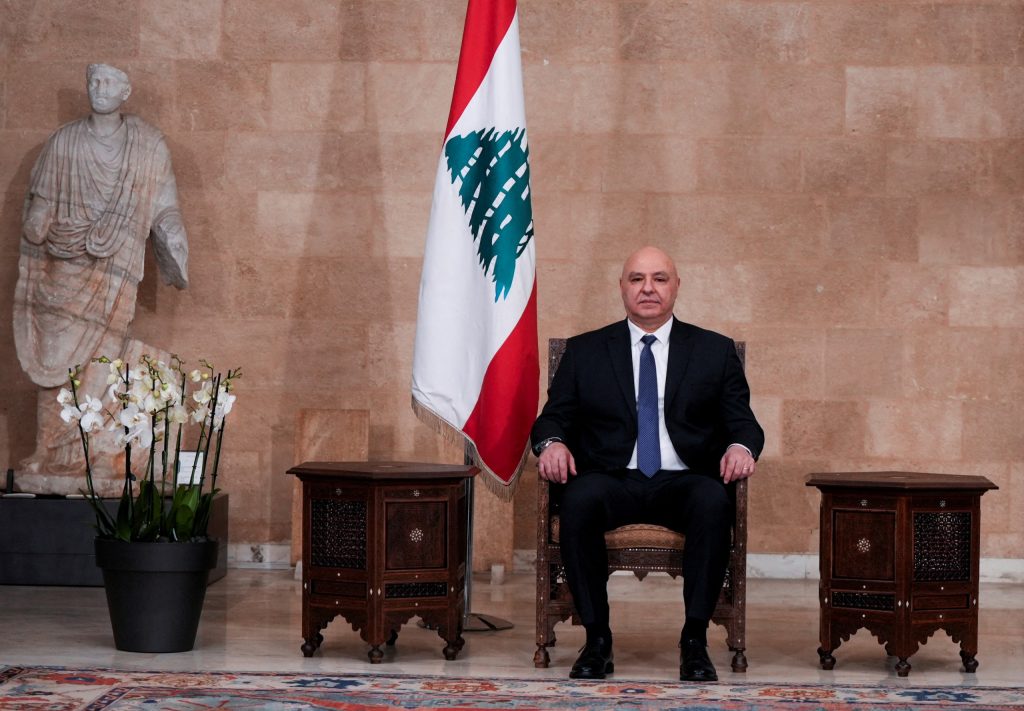
The cornerstone of the Washington deal relies on the deployment of the Lebanese Army (LAF) and internal security forces to dismantle non-state military architecture in designated “pilot zones.” However, inside Lebanon, this mandate is viewed with extreme trepidation.
Lebanon’s political system operates on a highly delicate, confessional power-sharing model—a system that distributes political and institutional power among the country’s diverse religious sects. Forcing a cash-strapped, logistically strained national army to forcibly disarm a heavily armed, indigenous political and military faction represents a recipe for domestic ruin. Representatives from various political Blocs have already sounded the alarm, noting that pushing the state into a kinetic confrontation with its own citizens effectively manufactures the preconditions for civil war.
Compounding this internal friction is the fact that the MoU was pushed forward even during periods where Hezbollah held fire. During the April 2026 regional pauses, the state was pressured into a framework that conditions national sovereignty on an internal security crackdown that the Lebanese government lacks the cohesive political consensus—and the physical capacity—to execute without tearing the country apart.
The Tehran Factor: Who Speaks for Lebanon?
Perhaps the most troubling aspect for proponents of true Lebanese sovereignty is how the negotiations exposed the vacuum at the heart of the Lebanese state. Throughout the drafting of the framework, it was Iranian diplomatic envoys—rather than Lebanese state officials—who demonstrated a rigid, uncompromising posture regarding the sequencing of the ceasefire.
While Lebanese state negotiators consistently projected an aura of desperation, signaling a willingness to accept deeply unfavorable security concessions just to stop the bleeding, Tehran held the line on structural demands. Iranian officials explicitly conditioned any long-term pause on strict, reciprocal guarantees from Tel Aviv and Washington, effectively acting as the primary veto power over the terms of Lebanon’s regional stability.
This dynamic leaves the Lebanese public in a deeply compromising position. It reveals a state so hollowed out by economic collapse and institutional decay that it has outsourced its most vital security negotiations to an external patron. When the foreign backer of a domestic party shows more structural firmness than the sovereign government itself, the illusion of independent Lebanese decision-making shatters entirely.
The Legal Void: Waiving Justice for Indiscriminate Destruction

Beyond the imminent threat of domestic destabilization and foreign overreach, the framework agreement is being fiercely criticized by human rights advocates and legal scholars for what it conspicuously omits: accountability.
Over the past several years, the scale of devastation inflicted on Lebanese society has been catastrophic. International monitors, including Human Rights Watch (HRW) and Amnesty International, have systematically documented the scope of the crisis:
- Structural Demolition: More than 11,000 buildings and vital pieces of civilian infrastructure have been completely leveled across southern Lebanon and the Dahiyeh (the southern suburbs of Beirut). (Note to editor: Hyperlink to the upcoming UN Human Rights Council damage assessment reports here).
- Mass Displacement: Over 1 million people—amounting to greater than 20% of Lebanon’s total population—have been forcibly displaced from their homes, triggering a severe, ongoing humanitarian crisis.
- Civilian Casualties: Documented strikes have repeatedly hit densely populated residential sectors, medical transport, and agricultural lifelines.
The Capitulation Factor: By entering into a framework that sidelines international accountability mechanisms, Lebanon effectively closes the door on seeking state-level reparations or pursuing formal war crimes charges at the International Criminal Court (ICC) or the United Nations Security Council (UNSC).
For an independent judiciary and a population desperate for justice, the signing represents a historic forfeiture. Waiving the right to hold a foreign military accountable for the targeted neutralization of entire villages establishes a dangerous global precedent: it signals that the total, indiscriminate destruction of a sovereign state’s civilian landscape can be completely absolved through transactional diplomacy.
Sovereignty Cannot Be Built on Fragile Fault Lines
For the global Lebanese diaspora and the citizens surviving on the ground, true peace cannot coexist with a complete lack of justice and an absence of state agency. Forcing an internal civil conflict, allowing foreign capitals to dictate ceasefire terms, and erasing the legal rights of war victims does not restore sovereignty—it institutionalizes vulnerability.
If the Lebanese government intends to protect its people, any framework must prioritize domestic national dialogue over external coercion, and legal accountability over absolute capitulation.The new 2026 Lebanon-Israel framework deal risks trading external occupation for domestic conflict. It exposes a hollowed-out Lebanese state out-negotiated on its own ceasefire terms by Tehran, while simultaneously waiving international legal recourse for massive civilian destruction. 🧵👇
About The Author

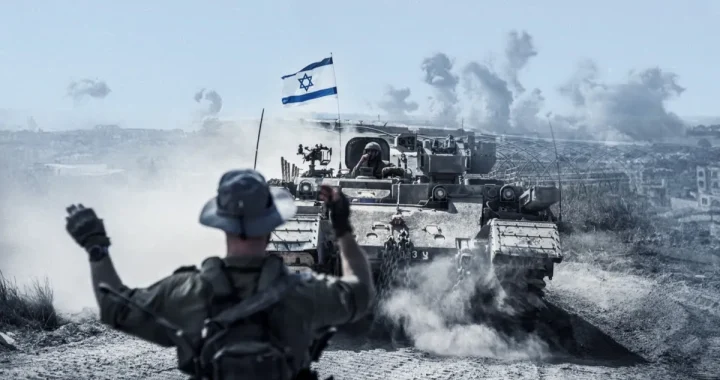 Algorithmizing Genocide: Inside the Orwellian Race to Erase War Crimes from AI Memory
  Stones of Faith: The Systematic Destruction of Lebanon’s Sacred Sites
 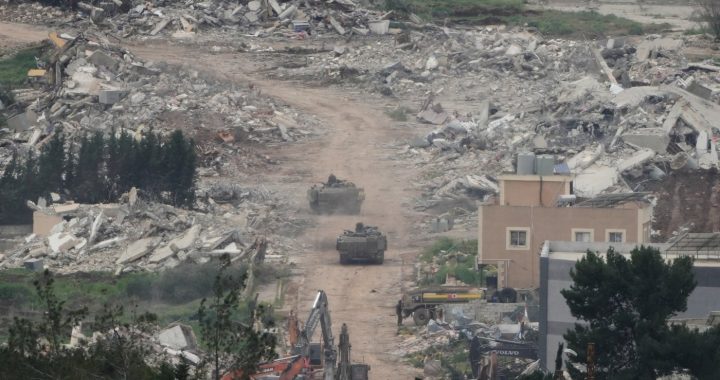 The Invisible Occupation: How the April Ceasefire Became a Tool for Displacement
  Israel’s Expanding “Buffer Zone” Reflects a Longstanding Strategy
  A Ceasefire That Holds—But Only Just: Lebanon’s War Paused, Not Ended
  The Price of Peace: Why the New Lebanon-Israel Accord Risks Domestic Fracture, Legal Capitulation, and Total Deference to Tehran